
We have the honor of interviewing LaToya Thompson, Naiomi Gonzalez, and R. Scott Okamoto as our guests for this episode to talk about racism in evangelicalism, decolonizing faith, intersectionality, and what it means to be an anti-racist as we move forward. White supremacy has deep roots in evangelicalism, and all too often, racist ideas and attitudes can follow us into the exvangelical community. Decolonizing our way of thinking is essential as we deconstruct our faith and find a new path away from toxic religion.
Be sure to subscribe to Survivors Discuss for more episodes on life after toxic religion.
LaToya Thompson (she/her) is a professional editor and writer who has guided coaches, entrepreneurs, veterans, moms, corporate professionals, and ministers toward self-publishing their books.
Naiomi Gonzalez (she/they) is a professional nerd. They are Puerto Rican, queer, and nonbinarish. They have a passion for helping other Christians, especially those questioning fundamentalist Christian theology, expand their understanding of God.
R. Scott Okamoto (he/him) was raised evangelical and was a golden child of church and Inter-Varsity Christian Fellowship in college. But he asked too many questions, disagreed with the answers, and slowly deconstructed through his early adulthood until he gave it all up while teaching English at an evangelical university. He is currently the creator and host of the Chapel Probation podcast, the author of Asian American Apostate: Losing Religion and Finding Myself at an Evangelical University (Lake Drive Books), and an editor and music supervisor for the newly launched Axis Mundi Media, an academic podcast company that is part of the Straight White American Jesus universe.
Listen on Spotify, Audible, Amazon Music, Podbean
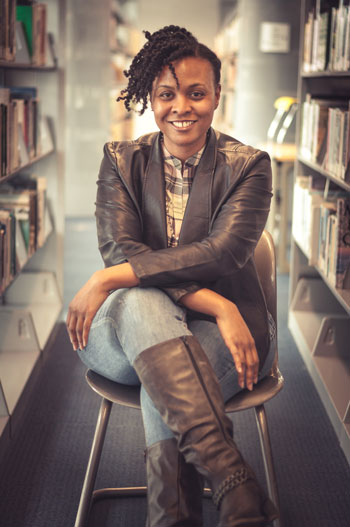


LaToya Thompson R. Scott Okamoto Naiomi Gonzalez
Find LaToya on Instagram and her website
Find Scott on Instagram, his website, and X
Find Naiomi on Instagram, Facebook, Substack, and YouTube
Cohosts:
Clare Heath-McIvor: kitkennedy.com
Shari A. Smith: shariasmith.com
Cait West: caitwest.com
Instagram: https://www.instagram.com/survivorsdiscuss/
Facebook: https://www.facebook.com/SurvivorsDiscuss
Read The Transcript
Clare: [00:00:00] All right, LaToya, tell us a bit about yourself. Yes, my name is LaToya. My pronouns are she, her, hers. I am based here in the Dallas Fort Worth area of Texas. I am not a Texan. I am, however, desert born, belt bred, and southern fed.
LaToya: So I was born in Phoenix, Arizona. My parents, my family are from the Kind of like the upper east, midwest from the Ohio, Pennsylvania area, old steel mill country.
And I know that my grandparents are, were part of the northern migration, so southern fed is just all of those recipes. So, so, you’re kind of sitting in this Bible Belt situation. Yes, I’ve actually gone and got a ministerial certificate in pastoral studies at a Bible college in [00:01:00] this Texas, Oklahoma area, I won’t say which one.
It’s been an interesting journey for me with my faith in Jesus Christ and how that has evolved. Yeah. So, I did a little bit of writing here and there. But it’s very sparse, so if you follow me, don’t get too disappointed.
Clare: I hear you. There’s not enough hours in the day or days in the week. Scott, what a background I’m seeing behind you in, in your recording space.
I guitars posters. I love it. So tell us a bit about yourself.
Scott: Yeah. I’m Scott Okamoto. I recently published a book called Asian American Apostate Losing Religion and Finding myself at an Evangelical University . It’s all about, I was teaching at a flagship, they call himself a flagship evangelical university called the Zoo Pacific, and I decided.
I didn’t believe in [00:02:00] Christianity about halfway through that time, and this is a book about how I sort of navigated that and extricated myself from pretty much all religion. Yeah, I have a podcast called Chapel Probation, which tells the stories of survivors of evangelical higher ed, mostly, and other schools, and we center mostly on BIPOC and queer voices, but we have everybody on it.
Clare: Yeah. Well, I think that’s so important to centre BIPOC and queer voices because these are the voices that have been really on the margins. Tell me, what has it been like for all of you, but I’ll start with Naiomi, what has it been like for you navigating this territory as a queer woman of colour, woman of faith?
What have been some of the challenges that that have come up your way and some of those observations that around, around faith and evangelicalism and, and all of that sort of, the intersectionality of that? [00:03:00]
Naiomi: So, I’m no longer evangelical so, yeah, I… I don’t really hang out anymore in evangelical spaces.
The few attempts I’ve made on, like, social media, or not even attempts I’ve made, but you know, people find you on social media has usually just evolved into those who identify as evangelicals calling me, like, apostate, or my favorite one was, like it was called, like, Satan or the Antichrist.
Slave to sin. And of course I responded and said slave to sin. I’m the master of sin. If I’m the antichrist then I, or when I try to talk about, I love it,
when I try to talk about like queer theology on social media People tend to come on and be like, You haven’t read the Bible. Here are the six verses that we want to talk about. And I’m just like, I went to seminary. I, I know this, but that doesn’t matter to them. So I kind of just, [00:04:00] I don’t engage.
Honestly, anymore. But I, so, like I said, my platform is for those who are leaving harmful theology, and I want to inspire them, so I kind of just leave those who are still advocating for anti queer theology. I kind of leave them alone. I haven’t had too many racists online, thankfully. And when I do, I just block them.
But some of my struggles, actually, are with mainline racism. Christians and other progressive Christians they’re not, at least in my experience to me, they’re not outwardly racist, like they don’t say horrible things, but it’s more like they ignore race, or they’re happy with like superficial engagement about race.
And it’s like, yeah, you’re not calling me a name and you say Black Lives Matter, but we kind of need more from you at this point. It’s 2023. I need anti racist theology that goes beyond a book study.[00:05:00]
Clare: Sorry, there’s a bit of a lag on my end. That’s fine. We’ll work with that. It’s all good. So anti racist. You hit up against the very foundational idea that Christianity is white supremacist in its nature. Ironic, given it’s about a Middle Eastern Jew named Jesus, but whatever. Latoya, what has been your observation as a black woman?
Standing through, like standing in a Bible Belt situation, I’m seeing that all three of you are highly educated. All three of you, and this is kind of interesting in the deconstruction and evangelicalism space, like the people who are most passionate about, about the church, about theology often end up kind of having to vocalize some really uncomfortable observations.
Tell me what it’s like for you, for [00:06:00] you being a black woman. Christian woman in a Bible belt state, what has been your experience of white supremacy in the church?
LaToya: That it is there, and it’s about as alive as it was in the first century. So for me, it’s been a very interesting journey. I didn’t grow up with like a Bible background where, you know, we were in church every Sunday.
I do remember going, I do remember participating, but I didn’t really get into what I would call like a very hardcore Bible based evangelical organization until college. And that’s where you tend to encounter Campus Crusades for Christ. They even had an extension of that, that was specifically for African Americans.
And so that’s where I found myself and it progressed from there. And I battled with very, with a lot of the things that I. that challenged [00:07:00] not just who I was, but the way that I believed and what I valued. So me being very outspoken, me having something to say as a woman, nonetheless as a Black woman, became a problem that wasn’t necessarily smiled upon or encouraged.
And then The friendships and relationships that I had with those in the LGBTQIA plus community suddenly became more about witnessing and saving souls versus the fact that I didn’t think there was anything wrong. with how my friends loved or how they identify, and it suddenly became wrong and sinful and, you know, love them but hate the sin and very much all of the cliches that came along with that.
And it was very it was very confusing. To be in a mostly Black church with a white [00:08:00] pastor and to hear things like, oh, it’s getting pretty dark here, dark in the sanctuary. Microaggressions that would come out from time to time. And then the ultimate to me, which all of it is horrible, but to think that there has to be this proclamation from Black people and Black women that You know, I’m a Christian first and a Black woman second.
As if my humanity and how I was created was somehow an accident. And somehow we get Genesis 1 in the midst of the fact that I have Blackness. And I have woman ness. And I have femininity. It’s, it’s really shocking to me that that has become a discourse, not just within, you know, white spaces, but within black spaces white supremacist, you know, misogynistic patriarchy is infiltrated into the DNA and the structure of this country and [00:09:00] into modern, you know, westernized thinking and religion, no matter what it, would fall under.
And so even those of us who are Black Indigenous people of color, we are also, you know, having to not just only deconstruct how we have been given certain doctrines and certain teachings. It is essential to decolonize our faith from what has come up through the generations, through chattel slavery and domestic terrorism.
of Black bodies, of Indigenous bodies in this country.
Clare: You have just mentioned so many things. I think this is, this is the executive summary of the episode. I think intersectionality, what it means to be anti racist you know, the slavery, the colonization. There’s so, so many things there. Before we cross to Scott, it sinks my stomach a little bit to, to, to sit with [00:10:00] this.
And there’s an immense sense of what do we do about it? And I’m probably sinking into my, my white saviorness there. And I want to acknowledge it cause I want to name it and I want to give it you know, say that that’s what it is. Scott, I’m going to say something that might sound ignorant. And I think the whole point of this episode is to call out the ignorance.
Often when we think of racism, we think of black people. We think of Latino, Latina people. We think of that. We often forget about the Asians, don’t we? Is that a correct assumption?
Scott: Yeah, depending on the context, I say, I would say, yeah. Definitely. Because there was this thing called the model minority myth.
Oh, and I should say, I forgot, I apologize for not saying my pronouns are he, him at the outset. I was embarrassed by all the mess behind me.
Clare: Oh no, it was inspirational mess. I like that blue guitar.
Scott: What was I saying? Oh yeah, so [00:11:00] Asians historically have not had much presence in America. I think we still only make up like 6 percent or 7 percent of the nation concentrated on the coasts.
And so, um, Evangelical culture being what it is, it’s kind of like, you know, always a hundred years behind the rest of the times. And so, yeah, when you talk about, like, diversity and multiculturalism in the church, it’s always a black and white conversation. And there are people who even go so far as to say that Asian folks are white or, you know, white adjacent.
And that really, really just kind of leaves us invisible. Marginalized you know, we don’t, we’re, we’re seen as the ones who don’t cause trouble and we don’t we’re respectful, we’re, you know, we’re, and it’s such, it’s such horrible gaslighting of everyone because it pits all of the people, the BIPOC folks, against each other to, to fight over what little space we’re afforded and it, It negates the [00:12:00] histories of not just Asian Americans, but everyone.
And then it negates sort of the Asians as, as this monolithic group when really there’s nothing similar between a Chinese person or a Korean person or a Japanese person. There’s not food or language black hair. I’ll give you that. Well, we have, we, we fall under that umbrella. Yes. By and large, yeah, we, we do sometimes get left out.
And, and I’ll say this, you know, sometimes. Oftentimes, Asian American culture can be racist and can be feel like superior. Like all the Asians think they’re the superior Asians, you know, and, and then that extends to the rest of the world, too. You don’t see that here in America because we’re sort of invisible.
You know, I write in my, the, the prologue of my book that Asian Americans Need to fight for their place, but we have to get in line and we have to recognize the work that has been done particularly by Black folks because they started it. And if we don’t line up [00:13:00] behind Black Lives Matter, we’re useless.
You know, we, we have to build coalitions and we have to build bridges between all of our communities to, to fight white supremacy together. And I don’t know that most or a lot of Asian Americans. Have that perspective, and that’s what people like in my community here are trying to help make happen, to educate our people about the history in America, and what the place is that we exist in.
Not just in the church. I’ve kind of given up on the church, but in, in American culture. In Western culture.
Clare: That’s an absolute juggernaut there. It’s a lot to wade through. Your, I think we probably, is everyone here in Apostate or is it just, just me? I think. I think. Oh, no. Naomi’s in apostate as well.
Oh yeah. . I’m definitely in apostate. . This is how you define apostate. I renounced my faith. That’s clear. .
Scott: I was called Satan a lot. At APU, [00:14:00] so. Oh,
Clare: Satan, jeez.
Scott: But you know what? It’s kind of an honor. Yeah. It’s the top one. Yeah.
Clare: I just got Jezebel. I think that’s the pinnacle of problematic womanhood, isn’t it?
To be called Jezebel. Yeah,
Scott: and that’s like such a patriarchal buzzword. That’s an honor.
Clare: Absolutely a patriarchal buzzword and there’s, there’s intersectionality here, but I want to circle back to perhaps the most the, the thing that’s hit me between the eyes the most is, well, actually the most, hell, there’s a lot in it.
So first things first, can we unpack what it means to be anti racist? Help me with that. What I think the, the, the white. The white reflex is to grab the microphone and proclaim, I am not racist, to the white reflex is to organize the rallies. It’s not the right reflex. [00:15:00] It’s not the most helpful. So Naiomi, to you, what does it mean to be anti racist?
What do you need from us?
Naiomi: For me, anti racist is a lifestyle particularly for the church. It’s not just about having a book study every once in a while. or, you know, having, you know, a Black Lives Matter flag, that’s fine, but it needs to encompass every single aspect of the congregational life. So from the ordination process, which surprisingly a lot of mainline churches are predominantly white so a lot of the people who get into the ordination process are white and they can be progressive, that’s fantastic, but I mean, that’s an issue from the liturgies being used, from the songs.
From the whole culture, because sometimes some churches are like, we welcome everyone. And then a black or brown person walks in and it’s like, you’re nice, I guess, but [00:16:00] this doesn’t feel safe for me. This doesn’t feel like home. It just feels like, you know, You want a little bit of color, but you don’t actually want to do any substantial changes.
It involves a willingness to have difficult conversations and to make mistakes and not be babied for it. I can’t tell you how many times I’ve had people be like, Well, I feel like I can’t say or do anything because, you know, people will get mad at me. Okay? And? Or I’m going to make a mistake and people are going to yell at me.
Yeah, I mean, apologize, and if it’s not accepted, it’s not accepted, but this, like, idea of perfection is also part of white to supremacy, but also, you’re gonna make mistakes, and some people are gonna get angry about it. Deal with it. If that’s the worst thing that happens to you, you’re lucky. Black and brown people, asian people, people across the [00:17:00] color line, yes, have had to deal with a lot more.
So for me, anti racism really is a lifelong project. And it’s something that should impact every aspect of congregational life. And it’s a project that never ends. I always tell some of my white friends Who tell me, oh, I feel like I’m not doing enough. And I’m like, well, maybe you aren’t I mean that’s the reality.
Clare: Sit with the discomfort, friend. Sit with the discomfort. Yeah.
Naiomi: I tell them I am not the person who’s going to…
Clare: Yeah, so, so I have to ask, what are some of the practical ways that we can see the, the fruits of white supremacy or the, and, like, people might go, I’m not a white supremacist, I’m not a neo Nazi, well, there’s also the positional aspect of whites being supreme So [00:18:00] more visible.
So, and I’m absolutely horrified at the idea, LaToya, that you’re in a largely black church and yet they could only find a white pastor. What are these elements? How do we spot this thing in our churches? And what are some of the things that you would like to see change in order to create this equality?
And picking up on what you’re saying, Naiomi, even if it’s… Even if it goes the other way for a while, even if we’re giving more space to BIPOC people. It’s not such a bad thing given the history of it. Latoya, your insights please.
LaToya: Yes. I do want to address one thing. So Clare, you did say as you transitioned to Naiomi with your question, what do you need from us?
Clare: Oh.
LaToya: And that’s… That’s the type of verbalization of thinking that has to be going to feel uncomfortable. Yeah. That’s the answer to that question. [00:19:00] Absolutely nothing. The reality, I’ll, and I’ll, and I’ll backtrack and I’ll come back.
Clare: Yeah.
LaToya: So I’m going to paraphrase Toni Morrison. In an interview that she did, she made it very pointedly clear how she felt about racism and that it’s not her problem.
It’s not a black problem. It’s not a brown person’s problem. It’s not an Asian person’s problem. It is. a white person’s problem. Yes. And her question then said, aren’t you tired of thinking this way? Aren’t you tired of feeling the way that you do or seeing other people endure injustice while you stand by?
Are you not tired of that? Are you not sick to your stomach? How do you honestly feel about that? Because we already know how we feel. I know what my life’s like. I know what all the emotions I have on the inside of me exist in. Yeah. But the very huge question mark in a lot of this conversation [00:20:00] is, what are y’all gonna do about it?
Y’all being unequal.
Clare: Yeah.
LaToya: So, when I look at how do we get to equality, is to acknowledge that it’s unequal and it’s unequitable and it’s unjust in the first place. And I think that we all actually are there. I don’t think that that’s necessarily a point of view, specifically, you know, in the United States.
I don’t think it’s a point of ignorance any longer. I think people are well aware of what systemically has taken place and continues to take place. And it’s becoming very clear who does not give a damn. And who wants to stay the same is becoming very clear who is willing to stay quiet, sit on the buy ins, the sidelines of all of that, and continue to receive the benefits from it.
And it’s very clear, those of us who are sick and tired of being sick and tired, to quote Fannie Lou Hamer. So, in order for there to truly be equality, It’s going to take giving up. [00:21:00] Yeah. It’s going to take letting go of systemic situations and being willing to envision what does the world look like? What does a country look like?
What does the church look like? If we’re not continuously holding on to. A white supremacist, misogynistic, patriarchal, imperialistic doctrine that was started in 300 A. D. by Constantine for the sake of political power.
Clare: Oh, okay.
LaToya: That far enough back and realize that what we see today is because of what was done back then, way past the point of Christ resurrecting, if you still choose to believe that, then we have a serious problem with our doctrine.
My biggest thing about seminaries and Bible colleges is that they excuse so much of the history of Christianity. They teach it, but they don’t sit there and actually judge it. And [00:22:00] we’re told to judge it. were called to look at the fruits of it and say, is this the good tree or the bad tree? Yeah. Yeah.
Clare: That’s so, and I, I want to flag there exactly what Naiomi was talking about happened. I did it wrong. And it was on me to sit with the discomfort of that. And thank you for teaching me that, and scrutinizing language is something that is so, it’s so interesting to sit with because it is inherent, it is in the wiring, isn’t it?
It’s, it’s been coming down the pipeline since Constantine who, has a lot to answer for. So I, I just wanted to, to flag that if you get picked up on something, great. Because it means that somebody felt safe enough to pick you up on it. That’s the first thing. But also, I’m now going to, it’s, it’s my duty now to think about the, the phraseology that I take for granted.
[00:23:00] There’s politics and power in what you’ve just said there. There’s intersectionality in what you’ve just said there. The theology of this, Scott, you sat in academic settings and then and deconstructed from there. You’ve given the hand signal.
Scott: Kind of. Evangelical. Academics.
Clare: Quote unquote. So, so tell me, tell me what that is, is like to, what kind of theology we need to introduce here to, and I didn’t even know that liberation theology existed. Did until about a month ago. That’s how white I am. So that’s something
that I’m reading up on the moment. Theology that’s out on the margins and, and how it feels to, to be out on the margins. ’cause it’s not an experience I have. Look at me, I think about the sun. It gets unburnt. But what, what, how do we do theology?
How do we [00:24:00] change the language? How do we sit with all of this? And then follow up question. You said you’d given up on church. So, you know, basically this is your opportunity to say whatever you want to, Scott.
Scott: Yeah, and I want to sort of add to what Naiomi and LaToya were talking about with anti racism, because I think that’s all tied together.
The anti racism is, is a mindset, it’s a lifestyle, it’s an action. But I think the way we get there, and that, and that goes for all, you don’t have to just be a white person to struggle with this. You know, we all have to find our place and our role. And part of that is with decolonization. And by decolonization, I think we mean that we all are, if you’re raised in America or Australia, you’re raised with a white lens to look through.
Yeah. The perspective is always It’s a white perspective that we have to adjust to adapt and [00:25:00] to survive in this world. In my book, I tell this funny story that wasn’t even about this until I realized it was. When I was leading worship for InterVarsity Christian Fellowship in college, a vineyard pastor came up to me afterward and said, you have the gift of worship because I saw an angel of worship sitting on your head.
Now, forgetting the theology and weirdness of all that, what I’ve done with that story is everyone I talk to now, I tell that story and I say, you all pictured a white angel. No one pictured an Asian or a black or a brown Hispanic angel, right? Everyone pictures a white angel because we were raised here.
Angels are white. God is white. Jesus is white. The Holy Spirit is probably white, if it’s a person. And, and, We have to extricate ourself from that. And there’s nothing wrong with it. I’m not saying they can’t be white. I’m just saying they don’t have to be. [00:26:00] And if we have truly decolonized minds, if I say angel, everyone should be picturing someone who looks like themself, you know.
Everyone should be picturing or someone that looks like an anyone. It should be a natural, random selection of people of color that get to have the wings and the halo and the little harp thingy sitting in the clouds, you know. And this is just, and I’m being kind of trite about it, but you know, it’s little things like this that…
That sort of eke into our mindset and our worldview and affect how we see ourselves, it affects how we see Whiteness and sort of defer to it. It’s like like I have so going back to your original question about being at APU You know, it’s a very white school. There were hardly any Professors of color and I’m in the English department.
I’m the only non white person. I had to learn how to and I was good at it. I grew up doing this I grew up in a mostly white neighborhood. I grew up in a black neighborhood to age [00:27:00] five and then Whiteness all the way and so I learned how to make people make white people feel comfortable around me I learned how to make a Asian joke So they knew that I was okay, and I could I could hang and I wasn’t gonna cause trouble It wasn’t until I started to just not do that anymore and just be myself.
It made people really uncomfortable It made you know, whoa an outspoken Asian man. That’s not It’s not how you’re supposed to be. You know, I have ideas, I have visions, and I disagree with things. I’m not being this sort of bowing, kowtowing, you know, smiling person that they want me to be. And so I was in trouble all the time.
Clare: Yeah.
Scott: And so it was a lot of fun though to be the scary bad guy for once in my life. Yeah, and then to your question about theology, I don’t know. I’m probably the last person to ask about theology. I, I think if you can incorporate. Decolonizing our minds, and anti racist, and post colonial, and liberation theology.
Awesome. I think that’s the way forward but like, I don’t know [00:28:00] that the Church is equipped or willing to do that.
Clare: Ah, equipped or willing.
Scott: Deep breath now.
Clare: Yeah, deep breath. Sometimes I just sit with… What’s being said and just kind of, you just have to, you just have to breathe into it, don’t you? You just have to feel the twisty stomach ness of it.
Scott: And interestingly, we know we’re talking about life after faith, you know, the deconstruction world, and Latoya and Naomi probably can say the same thing, but you know, I find myself having to sort of fight against these same issues in deconstruction settings, in people who are supposedly post faith or progressive faith.
That part hasn’t changed a whole lot, um, unfortunately. And there are people who are willing to, and who ask questions, and who ask how they can help, and I appreciate it when they do, but it’s definitely a ooh, that’s a long [00:29:00] discussion that we’re about to embark on.
Clare: Yeah, well, it is because we seem to have carried the same internal structures out of evangelicalism and into the deconstruction space.
There can be dogma there, and people can try to tell other people how to deconstruct, and it just doesn’t work. Yeah, Shari, did you have something to throw in?
Shari: I’m honestly, I’m just kind of sitting here. I don’t know what I have to add to this conversation, but sitting here thinking about, like, my experiences as a white woman like, I’ve been to that multicultural evangelical church where we had, like, I don’t even know how many different ethnicities and language groups, but I just, I, I remember hearing so much shit talked about how multiculturalism was a sin in that church.
And that’s, like, I, I had a lot of [00:30:00] unknowing to do with my own ingrained racism, but I even remember thinking, like, how can this be sinful, right? Like, this, the reason I chose that church is because I loved …. I love that multiculturalism. Yeah, sorry, you were going to say something. No, no, I was just remembering.
It’s funny how you don’t remember things. Like, I remember somebody saying to me after my husband came out as gay and we were telling some people that we were dissolving our marriage somebody had the gall to tell me that church wasn’t homophobic. And I was like, hang on, what? We sat in the same sermons.
We heard the same things. You just don’t hear it unless it’s part of your experience. So tell me, this, this is, this is what I want to learn. People talk about decolonizing faith. And I go, [00:31:00] how? What does that mean? Hearing Senator Price say, there are no ongoing negative effects of colonization, dot, dot, dot, Indigenous people have running water now.
And me going, what the what? Like, what even just happened there? That’s my base kind of level. But Latoya’s laughing. Please. Please Latoya, help me understand how we decolonize. And then I’ll throw to Naiomi after that. How do we decolonize? What is decolonization?
LaToya: I mean, we’re experiencing that here in the US with states like Texas, states like Florida. We’re hearing, you know, Black women who are state representatives in the legislature saying things like, Oh, I’m glad. that I’m not somewhere, you know, worshiping a tree which is a comment based on the fact that, you know, we needed, we as in Black people, needed slavery in order to come into contact with Christianity, [00:32:00] which is absolutely absurd and a complete bold faced lie if you were to even begin to track how the faith of God moved into Africa by The word in the mouths of Africans, it did not require anyone coming with pale skin to come say, Oh, this is Christ.
That was done for the purposes of manifest destiny. That was done for the purposes of colonization, of power, of, you know, conquer, conquering and imperialism. We did not, as Black Americans, need to endure terrorism, torture. And all types of, you know, just inhumane things in order to have the Christian faith.
And then to even, the other side of that is to begin to even say, you know, what makes your Christian faith more superior than where I came [00:33:00] from? And what it is that I chose to believe? And what it is that my people believed in?
Clare: Yeah.
LaToya: That’s the decolonization is to stop setting, to stop centering Christianity as The end all be all of, you know, this is how you should worship.
This is how you should believe in order to quote, unquote, be saved or be good or be holy or be righteous. It needs to come to the point where it’s like we say Christianity is now here with everything else, whatever you’re choosing to believe, it’s, it’s in line. It’s not better. It’s not more important than, it’s not more highly valued than.
It’s one of those things where, you know, we, my son is in elementary school. And I, in my home, we have de centered Christmas all together. It’s, it’s no, a lot of reasons, and I won’t go into another historical, you know, account about why, but it’s, [00:34:00] you know. It’s because there are so many other celebrations that are occurring from October through to the end of December and into January that have nothing to do with being Christian, but are just as equally beautiful, just as equally rich, just as equally fantastic and fun to be a part of.
And to experience and to learn from. I think that’s a key thing is beginning to just say, Okay, Christianity is in the world. And there’s something else also. There’s so many other things. So many other ways to believe. Besides that. Yeah, that’s, yeah, thank you, that’s, that’s Beautiful, that’s really beautiful, and we are coming up to that point of year, so I’d encourage people to, to look into some of these other things.
Clare: Naiomi, decolonization and please, throw your, your insights as a, as a queer person of faith what’s this, what does this mean for you, and what do you wish people knew? [00:35:00]
Naiomi: Well, for me a key part of decolonization Involves what we’ve been talking about, de centering whiteness even in deconstruction spaces, there’s still this emphasis on whiteness.
It’s like queer people and black and brown people get thrown into the conversation for one off. We’re like invited to things and then that’s it. To me, decolonization is also like anti racism. It needs to be a lifelong thing. It’s not enough to have one episode that features a Black and Brown and Asian and other people.
It needs to be, our experiences need to be a part of this. And for me, in some of the deconstruction spaces. There’s still that centering of whiteness even as former white evangelicals leave evangel evangelism. Sorry. I was like, how do I, what am I saying?
Clare: And how do we say the word
Scott: long word?
Naiomi: That’s, I, I’m surprised I haven’t fumbled over my words [00:36:00] earlier. That’s a very Naiomi thing for, to do. Because even in some of the deconstructions. spaces I’ve been in I kind of gotten slammed for pointing out that, hey I understand that you’re in pain, I understand that, but sometimes the healing that’s taking place in these spaces come at the expense of black and brown people by having our experiences ignored or by having theology that’s so harmful being centered.
And in terms of, Queerness, I think people need to understand that the heteronormative, monogamous form of Christianity that’s being espoused is not the only form of how to do things. I would argue it’s not even the only form of Christianity that’s available. And so part of that is understanding how heteronormativity and white supremacy and monogamy go together.
I’m not saying everyone has to be like, you know, Genderqueer or non binary or poly, I’m [00:37:00] not saying that, but how heteronormativity and monogamy happens and how that goes hand in hand with white supremacy. I mean, in the U. S., there’s hatred and loathing against single mothers, especially single mothers who are black or brown because we’re, you know, people who fit that demographic are treated as second class citizens and are treated as threatening.
The sanctity of marriage. I’m sorry. We, the U. S. had a president that’s been what, divorced like three or four times and cheated how many times? But yeah, it’s black and brown people and queer people who are threatening the sanctity of marriage.
Clare: Yeah. I mean, gosh, let’s talk about biblical marriage for a second. There’s marrying your rapist or being forced to marry your rapist. There’s, there’s, There’s, you know, polygamy, there’s siblings, there’s all sorts of, you know, biblical marriages is not tidy, people, let’s [00:38:00] decenter that there’s, there’s, it’s interesting, I’m usually a very quick mind, I’m very, I can float across the top of topics very easily, I’m I interview neuroscientists and other health related researchers for work.
But I’m sitting with the fact that with this topic, I’m slowing down because I feel like I know nothing. I feel like I don’t want to offend. I want to support. I don’t want to offend. What would you tell people who are sitting in this kind of space, and I’m going to throw to Scott first, who are going, okay but I’m not racist, but what do I do to, and I’m going to switch the language here from not help, support, elevate the voices of, of of people who are not white and are not, you know, to, to decenter all this stuff that, that.
It’s so ingrained. What do you [00:39:00] wish people knew, Scott? What do we do?
Scott: Yeah. Well, I wish I had all the answers. Because, you know,
Clare: it’s tough. You don’t? What the hell?
Scott: Okay, I have all the answers. Because if you’re a white person in America, I can’t speak for Australia, but if you’re, if, and you only live in a white neighborhood and you go to your job that has only white people and you go to your church that has only white people, I don’t know that you can do anything.
I don’t, I don’t know that there’s a way forward for decolonizing. I mean, you can do it intellectually. You can read books and you can watch YouTube channels and you know, go on Naiomi’s Instagram. But like. Unless, unless you have relationships with people, you know, it’s, it’s just an intellectual pursuit.
And I hear lots of stories in the [00:40:00] deconstruction space of people who, who will say the right things and read the right things. And that’s great. And I’m not saying don’t do that. I absolutely do that. Read Toni Morrison. Read, you know, every, everything. But, I don’t know. When these people actually come face to face with BIPOC folks, they admit to, like, freezing and not knowing what to say.
And I don’t know, to your point, Clare, I think maybe they just have to lean into that discomfort and power through, and assume a position of humbleness where you just say, you know, I don’t… I don’t know. And because we don’t know either. We, we, we only know our experiences and, and we can read about all the others until we cross those lines and establish relations, relationships with people as people, not Not as this eat, pray, love kind of idea that I’m gonna, you know, the world is mine to, to collect experiences and, and all this stuff.
But to [00:41:00] say I am trying to find legitimate, real, we else, Latoya, she’s absolutely cackling in the background. , eat, pray, love is kind of a buzzword for. BIPOC folks
Clare: I’m sure there’s, it’s,
Scott: it’s yeah, but
Clare: so, yeah, the world is not ours to collect experiences
Scott: from. Well, or, or it’s all of ours to collect experiences from on, on, on equal footing.
And yeah, with, with full mutuality between us when, and that goes across racial lines, it goes across identity and sexuality and especially gender, you know, that’s so, yeah, sorry, I don’t have a good answer. I think I don’t have a lot of hope, but I have hope in these discussions here where we’re all listening to each other at the table or on our, on our screens.
And so,
Clare: yeah. So the, the question I want to ask. Of Naiomi and then Latoya. I’ve noticed in, in human resources practice that people [00:42:00] can go diversity shopping. They can go, have we, have we interviewed somebody who’s a woman, have we interviewed somebody who’s queer, have we interviewed someone of color, and then they’ll go and hire someone white.
You know, I, and I understand that, I understand the discomfort, I understand that when you’re so ingrained with all of these white supremacist ideas, and again I’m saying I’m not calling Christians neo Nazis, but I’m saying that we’ve got white platforms, we’ve got white music teams, we’ve got white ministry teams, we’ve got white missions teams going into these disadvantaged countries, you know, developing countries.
And we’re using these words that are so unhelpful, but, but in the, in the business world, we’ve gone to this diversity shopping sort of thing. And I’ll tell you a story that made me so angry that it’s hard not for me. To use swear words, but I’m trying to cut back somebody who I work with or worked with ages back, [00:43:00] said to me, like we were sitting and talking at a, at a networking event.
And, and they said to me, um, Oh, you’ve got a really impressive network. And I was like, Oh no, not really. And then they said to me, do you have anyone Indigenous that I can have? And I said, what? And they said, yeah, you get better grants from the government if you’ve got Indigenous people. So do you have any Indigenous people that I can have?
And I was like, what do I own them? I was like, you know that we don’t own people, you know that we don’t just like, and I said to this person, my address book is shut to you. I will not give you any of my contacts because we do not own people. We do not go diversity shopping. We do not go, in my mind, don’t do tokenistic.
If all you can do is tokenistic, then. Don’t do it at all. How do we move beyond diversity shopping to authentic, real, dyed in the wool, [00:44:00] equality, diversity, inclusion, Naiomi, advice?
Naiomi: I mean, I’m going to be honest, I’m not sure a lot of these businesses or even congregation actually want to do that because it’s still viewed as kind of a, let’s add some brown or hispanic or black or asian and like. Let’s just add that and then walk away. That’s enough to just have one person or to have superficiality.
Again, it has to be something that penetrates the institution from the ground up, from every aspect of it. And I don’t think a lot of places even… Those that bank on being progressive want to do that because if they truly did, it one, will cost a lot of money, and two, it will involve getting rid of cherished traditions and way of doing things.
And I don’t know if y’all have been to a mainline church recently, but a lot of them are freaking out about declining membership and some of their responses are to Keep doing [00:45:00] what they’ve always been doing and holding tighter onto it. And I’m like, that’s, that’s not gonna work. So I think there actually needs to be a desire and a recognition that actually do this, it’s going to be costly.
And I don’t think a lot of institutions and certainly a lot of businesses actually want to do that. What they want to do is they want the benefits of appearing. To be diverse without doing any of the hard work. They want to, you know, I would, this happened years ago, but it would be funny I went to, I’ve, most of the institutions I’ve been to, with the exception of a public school, were predominantly white, and me and my friends would joke every time we saw a photographer, we’d be like those of us who were, Not white.
We’d be like, Oh, we have to hide because if we don’t, we’re going to be on every picture and every pamphlet for every, for everything. And cause it’s a, it’s what you call diversity shopping. It’s just, it’s a very easy signal to be like, Oh, look how progressive we are, or look how not racist we are. But the actual.
To get [00:46:00] beyond it is costly. It’s gonna cost. And I don’t think a lot of institutions, predominantly white institutions, want to take that risk, even if, even if what they say is different, their actions are backing that they still want to center whiteness. They just want to benefit from having one or two non white people to endorse their worldview.
Clare: Yeah, do you know what, as an ex photographer I got really good at taking photos from angles to make church look full , and I don’t know. I’m, I’ve, if I still had access to my, to my the photos that I took of church, I might go back and audit it to see whether I did the thing where I centered. BIPOC faces, oh gosh, I hope I didn’t, and, and Shari’s written in the chat.
“white people are typically very bad at. Sitting with feelings of discomfort and making mistakes in this [00:47:00] conversation. I love that this is being talked about.” Yeah. Look, if you’re listening, have a happy dose of depression, people. We’ve got a lot of work to do. A fist
bump from Scott.
Scott: Lean into it.
Clare: Lean in, lean in.
Latoya, what do you wish people knew about about this? I’ve forgotten the question that I even asked, Naiomi. Diversity shopping, that’s right. How do we move beyond diversity shopping?
LaToya: I 100 percent agree with Naiomi. And I mean, the proof is in our legislation. You know, this disunited States of America’s Supreme Court, the highest court in the land made the decision.
By a majority vote, that affirmative action is no longer needed. In our universities, our colleges. I need to check and see if it was across the board. I think so because I know where I work, there was a big enough hoopla that I think it affected corporations. anD being that I am in corporate America, [00:48:00]is Naiomi is 100 percent right.
They, I, I do not believe that the majority of private corporations, public corporations, universities, colleges, even public school districts want to actually do what is necessary to fully incorporate the ENRI, Diversity, Equity, and Inclusion systems and practices, procedures, and policies. into what we do from a day to day basis.
And she’s correct. In order to do that, it definitely does cost a monetary investment because you’re going to lose before you gain. And they’re fully aware of that. And we’re already dealing with recession refuse because green is the color of choice. around the world and in America. So it’s, they’ve done the bare minimum and, and not without being called to task.
I work for Fortune 500. Within a lot of these corporations, you have what’s called employee [00:49:00]resource groups or employee resource networks, and they’re based off of, you know, race, ethnicity, some type of affinity of that nature. And they are speaking up. They are coming and saying, Hey, back in 2020 when the world was on fire and a cop put his neck on somebody and said it was okay, you said that you were going to do X, Y, and Z.
Where is it? It’s not like they’re not being called to task. They are. But we’re still living in a system that favors them not having to be accountable and own up and give us results. And that’s where again, I say, what are y’all going to do about it? Yeah, the reality is, is that white disruption, white disruptors are a very key part of how systems can change.
If we go back and we just look at the Civil War, we look at the abolitionist movement. Yes, absolutely. Black people, indigenous [00:50:00] people were doing of, you know, moving people out of plantations and slavery out of chattel slavery to the best of their ability. But it was the voices of heteronormative white men and some heteronormative white women speaking up and, you know.
Going to, they could walk into a council, they could walk into a legislation hall and be the ones to speak up and say, this is not okay. And if you, and again, green is the color of choice. If this is what’s going to happen, here’s where I take my monetary value. Yeah. So, it’s heavy. It’s about white disruption.
That is a huge part of the story. I speak for myself with liberation theology. I Get that we have to name things, but you know, and I still, you know, I don’t identify as Christian. I tell people to the best of my ability, I’m working to be a, I want to be a disciple of Jesus [00:51:00] Christ. and liberation theology is the gospel.
It was the point the whole goddamn time. If you look at the scripture, it’s like, I’ve came to set the captives free.
Clare: Yeah. Let’s, let’s not talk about the Christian Republicans in jail terms.
LaToya: And that’s when you realize, and that’s when it becomes very clear, like, Oh, they weren’t following Christ all along because in order for you to set captives free, you would have had to let them go.
You would have had to stop conquering. You would have had to stop raping and pillaging in order for that to happen. And so the concept of liberation theology, I get it. I understand it where why it’s being said, but quite honestly, it is the gospel. It was the point the whole entire time. For me, I have chosen to go into womanist theology.
And that’s W O M A N I S T, Theology. In the setting that I’m in, it is a church. We [00:52:00] identify as a church. And we say all are welcome. LGBTQ+IA, we are, we’re all welcome. And we de center, you know, the whiteness that we’ve all been taught. And we, we take the opportunity to honestly go back and look in the Bible.
For, as if we’ve never looked at it before, but centering the marginalized, centering the voices. How does this make a black woman feel if she reads this? What was, who was Christ really talking to in this moment? Was he talking? Cause you don’t see him, you know, when he is talking to the, the, the elite, he’s, he’s cussing them out quite honestly.
But when he’s speaking to those who have been trodden down, oppressed. By being in occupied Roman territory, a colonized Israel by Rome, he’s saying a whole lot of different things. He’s having a totally different message. So, and I [00:53:00] don’t know where I was going with that, but, but it was good. It was good.
And there’s so much in it to share. Yeah, I would, I would challenge people to not just start to look at other theology. But really, if you’re, if you’re choosing to stay in your faith, if you’re choosing to identify as Christian, or at least become, you know, say you’re still kicking it with Christ, with Jesus.
Take the opportunity to truly go back, like, just, you gotta go undo Sunday school. You have to, you have to unschool that Sunday school and go back and look at it as if no one ever, as if no one had ever taught you. What they thought this was. What are you seeing?
Clare: Yeah. Wow. Okay. That’s, that’s big. That’s big.
So it, and it’s funny, I, I, when people ask me what my faith is, I say I’m agnostic with atheistic fantasies, but when I write about Christianity, I still say we and I still do really love the idea of Jesus, but not white Jesus. White [00:54:00] Jesus is not about that.
LaToya: I tell people that God is a black woman, Clare.
Clare: I agree with that, and I’m going to say something really crass here, do you know how I know God’s a woman?
LaToya: You’re mad at me! Black people get mad at me. What do you mean God’s a black woman? God, God is definitely, why wouldn’t God be a black woman? Why wouldn’t God be a black woman? I’m going to, I’m going to leave my joke off because this is not a crass conversation.
That’s interesting because if you go ahead and read Dr. Christina Cleveland’s book, she quotes a woman who was riding with her on a plane who was like, well, you know, the real Jesus is white. As if a black or a brown Jesus could not still hang on a cross for her salvation of sins. She’s like, no, the real Jesus is white.
And that’s…
Clare: Jesus was literally… How do they not read the Bible? How do they not see that he was Jewish? He was Middle Eastern. That’s like 101. Like, gosh, so, okay, I want to [00:55:00] ask, and I’m going to flag here, an hour is not long enough to get all of the wisdom from the three of you, and I’d love to poach you for my other podcast.
But, so let’s just flag that there. But I want to ask Scott, and then I want to ask Naiomi. You’ve given up on church. So I, I want to talk about firstly to Scott, progressive Christian, progressive Christianity. It’s a thing, it’s, it’s new, but it’s not quite, it’s not quite floating your boat. Tell me why and tell me what your opinion is about whether or not church can you know, put this genie back in the bottle when it comes to you know, I don’t know whether that’s the right thing.
I don’t know. Say something, Scott.
Scott: Okay, I got you. I was, as I deconstructed, I mean, I was progressive Christian for a number of years attending this lovely Episcopalian church here in Pasadena that checks all the boxes. You know, we called it NPR church. It was, it was like It was great. It was still pretty white [00:56:00] centered, but yeah, but if there’s a future for the church, I think that’s…
It’s those kinds of places. It’s just, I don’t know, when too many people start gathering, it makes me nervous now. Cause with the groupthink and just the tendency here in these places to gravitate back towards… White centeredness. It’s just so ingrained, and it’s so hard. And I’m not saying it’s impossible, and I know there are probably wonderful churches that are doing it right.
You know, Latoya’s group sounds amazing. You know, if I’d found something like that, I might still be going to a church, possibly. And that would be the one.
Clare: But if it involves moving to the Bible Belt, maybe it’s not your thing.
Scott: Yeah, it’s well, if the point is there, then, hey, you know, sure. Going back to, like, what has been said before, I think Naiomi said, you know, the money and it’s like, they’ll find the money if [00:57:00]they have the will, you know, like if, if they need to protest against, you know, Muslim people or, or abortion or something, they always find the money.
It’s their, their tax exempt organizations that have tons of money. So, yes, it’s a problem and then they’re not going to spend it, but if they wanted to, they would, you know, if, if they had. Any desire to, to shift the way they think and the way they teach Sunday school and the way they do worship, the way that they hire pastors and have people speaking in front, you know, they would.
They just would. It wouldn’t be that hard for them to do it. It would be hard, but, you know, they’d find a way. You know, if they need to get a, if they need to gather a hundred buses to go to some MAGA rally in Washington, D. C., they always find the money and the resources to do it. You know, it’s… So, yes, it’s a problem, but this is why I don’t have a lot of hope, and I’ve kind of given up on, especially, I [00:58:00] feel like the greatest churches that I ever hear about are, like, people who meet in a house, or in a garage, or in a school gymnasium, who are just, they’re all, like, focused on making the world around them a better place, in addition to spreading the gospel, or, you know, doing things, and it just seems like as soon as you get That corporate status , and you get the worship team with the smoke and the lights and the pastor with the graphic tea and a thousand dollars sneakers and, and the, the little tattoo that always just shows right at the top here of the cross.
There’s always that yeah. Once, once you get that, you’ve crossed over into a place where you can’t come back from, you know, you kind of have to wipe the slate clean. And start over and start in humble beginnings, because, you know, even when I was a Christian, everything was about humility. You know, the, the, the early church was this ragtag group of people who were persecuted.
And, and Paul said, yeah, it’s awesome that we’re persecuted because it makes us stronger, you know, it makes us rely on [00:59:00] God more. And that, That component of Christianity is completely gone now because it’s become a mode of power. It’s become this vessel for supremacy and power and, and, and making everybody follow the rules that you want them to follow.
And they’ve, Christianity has lost it’s, it’s way of, of being this humble ragtag group of people on the edges that, that are trying to help people. people come out of their sort of mainstream sin or however they want to put it. And so, yeah, so sorry, we’re back to, I don’t have any hope in the church. So I,
Clare: well, that was the question and I want to follow it up with Naomi. You said way back in the beginning. And look, I would happily talk with the three of you all day. But it just can’t happen. So I will get you on UnChurchable. You have no choice in the matter. , you said back in the beginning that you had gotten some pretty nasty comments from even progressive Christians.
Call it out. Call it out. Like what, what, [01:00:00] what have been some of those comments and what, uh, you know, have you given up on the church?
Naiomi: Well, from the progressive Christians, it’s less likely that they call me anti christ, but mainly just talking about how I’m too, I’m too rough, or I’m too mean, or don’t feed the hand, don’t bite the head that feeds you, because I, I, I belong to a lot of, like, mainline slash progressive.
Churches or institutions and I’m like, which is very funny because some of these very same institutions and churches say they like my realness. So I’m like do you like my realness or do you just like the idea of having a brown person that you occasionally let speak and say what you, what they want?
So it’s mainly like. It’s not like Antichrist or Jezebel, but it’s mainly just like, I’m too mean, um, I’m too harsh. I need to be more compassionate and understanding to white, mainline churches. I don’t want to be like, because, you know, some of them will say, Oh, well, because, you know, a lot of them [01:01:00] are older.
And I’m like, your congregation is over a hundred years old. Like, I don’t understand how, how, how much longer do we have to wait for you to get it together? And yeah. And in terms of is there hope for the church? I’m gonna be honest. I think that the only hope for the church is for it to die. And I think we’re seeing that with mainline Christianity.
And a lot of mainline churches are understandably freaking out. I do want to acknowledge that it is painful when churches close. And I don’t want to dismiss that, but it’s also kind of like for a religion that’s really about death and resurrection, a lot of Christians really are hate actually living out that concept and I think.
Part of the dying is part of the dying to power, um, for some of these, I’ve told some of my progressive mainline friends, yes, we need to call out Christian nationalism, which right now a lot is evangelical in nature. We need to call out hateful evangelical theology, but part of me [01:02:00] is also like, are you speaking out because it’s the right thing to do, or because you’re no longer the center of power?
Yeah. Because some of the things that mainland churches have done have fed into Christian nationalism. It’s terrible.
Clare: Yeah. Yeah. That Venn diagram, that Venn diagram is there and I’ll tell you some stuff after we hit stop. But it, it’s really… Confronting, I think the COVID 19, you know, the advent of COVID 19 that co occurred with lockdowns across the world, with people staying home and realizing for the first time that maybe they don’t really need church to the same degree that they used to there was Thanks.
Brianna Taylor, there was George Floyd, there was Black Lives Matter, all of this kind of came together and the pushback from the whites was all lives matter. It was like, yeah, no kidding, but your life has been the only thing that mattered for a really, really [01:03:00] long time. So, you know but yeah, oh, goodness.
So in, in amongst all of this, we’ve seen some really incredible voices emerge. Naiomi, Latoya, Scott, what inspired you to, or what compelled you, as a better word, to start speaking out, to write the book, Scott to, to start gathering content and resources and people to, to talk about this experience, when obviously you have been.
Like, this has been a lifelong experience for you. What was the catalyst to start speaking out? Naiomi, I’ll start with you and then I’ll throw to Scott.
Naiomi: So the catalyst honestly was I was kicked out of a PhD program I, I was getting straight A’s so it wasn’t because of that, but they didn’t appreciate, again, my attitude.
And I’ll be honest, I can admit that I have a bit of a spicy attitude and I’m not always the most. Even handed? I don’t know how to [01:04:00] say it. So, I’m like, I’m not the most, I don’t know, professional. I don’t know how to say it. But they didn’t appreciate my attitude, which was code for I was talking about against racism.
I never said they were racist, although they were. I just said academia in general was racist, but they had an issue with that. Of course they didn’t say that. They had, they would mention things like, Oh, well, you’re not using salutations correctly in your email. Okay? Or you’re emailing just too much.
Or like, all those little things that I could work on if you had told me. But yeah, so essentially I was forced out of a PhD program in history. Though, to be honest, I should have known better. This school was founded by Confederates, and in the 1970s the Republican group wanted to get the Grand Wizard of the KKK there.
But so I should have known better than to go to that school, but their seminary was awesome. It was like, completely different. So anyway, so my life fared apart there, and I really [01:05:00] needed just something to… And so I made Faithfully Radical and which I always talked about social justice, but I think then it was like also talking about like getting through hard times and doing all that.
And now it’s kind of a way for me to just express myself occasionally and then focus on my writing. And. Offer people who want to that Christianity can be different. Yeah.
Clare: Yeah. Yeah. So that’s Faithfully Radical Christian on Instagram. Link will be in the show notes. Latoya, where can we find the stuff that you write when you write?
The occasional moments that you write? The stuff I write when I write so my Instagram, well, I’m everywhere Latoya writes. On most, on most all socials, LaToya writes W R I T E S. Cause I write my webpage is LaToyaThompson. com. There is a blog there. It is outdated, but [01:06:00] still fresh in content though.
It has not been updated I’m a single mother in America and I work a full time job and I take care of a little person. So give me grace.
LaToya: That’s hard work. I see you. I am right there with you. So, so Scott, the, the, the resident author. At this point, ’cause I’m pretty sure we’re gonna see books from others here too. What, what, what compelled you to start the, the podcast, the book, and of course, where can we find it?
Clare: Oh, yeah. So the podcast was sort of like a precursor to the book. I, I knew I was writing a book but didn’t have an agent or a publisher yet. And I also knew that I had so many stories about the crappiness of evangelical education that it was going to make like a 2, 000 page book, which I didn’t want to have to write.
I, I started contacting all the people that I kept in touch with at APU and with the idea that this would just be a [01:07:00] short run. We would talk about how crappy APU was for race and gender and sexuality and then I would write the book and then move on. But I had such a huge response that people kept messaging me saying, I went to this school and I want to tell the story.
And I went to another, and suddenly I opened it up for the second season to the rest of the world. And every, every week I get someone else saying, can I tell my story? So we’ve, and if anyone here wants to come on and talk about going to Christian school, or even a not Christian school, because we’ve done episodes about, like, InterVarsity and Campus Crusade, and it’s all bad.
But I had to wrestle with myself as an Asian American. I’m, I, most of my life, I just sat in the back and was quiet, because I didn’t think anybody wanted to hear from me. And, and frankly, no one really did. Very few. Luckily, I had some professors who kind of, kind of saw my potential. A couple of African American professors at UC San Diego really took me [01:08:00] under their wing and I met Toni Morrison through one of them who came to my class.
I was so shy. I was just like, hi, I like your books. And she was, she was, she was terrifying quite honestly because she just has this presence in the room and I’m like this 19 year old nobody, you know, I’m just I was just like, you know It was professors who told me I had something to say that was worth That was worth saying and hearing that started it and so doing the podcast was weird, you know, I’m talking into this microphone I don’t know who’s listening But I knew I wanted to write the book because I knew there weren’t enough BIPOC voices pushing back against evangelical Christianity And and I knew that in doing so, I could also elevate, you know, voices of other people.
So it just took some courage. You know, there was, everyone asked, are they going to sue you? Are they going to and they’ve thought about it. They’ve had meetings. I have people on the inside. I was kind of [01:09:00] hoping that they would sue me because that, that would have… Guaranteed sales would, would spike but they haven’t, they’ve, they’ve played it right.
And they’ve just kept silent about it. But I think all, I think everyone has a story to tell, not, not just BIPOC or queer folks. Even, you know, everyone has a story to tell. It’s just right now we’re getting mostly white centered stories. And, and there’s nothing, I’m not going to say anything bad about.
Most of them. There, there, we need those stories too, you know, religious trauma is real. It doesn’t really matter what race or, or identity you are, but yeah, we do need to sort of all sort of step up and tell our stories and I encourage anyone listening, you know, you have stories to tell, come on the podcast, come, you know, call me, I’ll put you on mine.
And and I’m writing more books and I, and I hope Latoya and Naomi writes more and, and do more because every, like, like Sherry was saying, you know, everything in this conversation is golden man. Like more, I [01:10:00] wish everyone could be part of this conversation ’cause that’s the way forward to, yeah. It’s, it’s everything, yeah.
And I think that is probably a good place to wrap this episode. But with the knowledge that it needs to be an ongoing conversation, it needs to be intentional, it needs to decenter whiteness, it needs to decenter you know, the colonized aspects of faith and, thinking and positionality in which we relate to people.
There’s so much to this. Thank you all for being here. From the bottom of my heart this is an opportunity for all of us to learn and to sit with the discomfort of that, which we don’t know or understand that which we haven’t seen because it didn’t apply to us. And this is the cultural moment to do it.
So thank you so much.
Honestly, really the very least. This is kind [01:11:00] of the minimum effort. And, and I hope that I can do better. I, I know that Shari and Cait share that sentiment and, and together I think. It’s important to, to keep on advancing the voices you know, passing the microphone and sitting back and listening and, and yeah, it’s a different position for us us Tighty Whiteys to take.But we need to do it for, for as long as it takes. So thank you so much. I’m Clare Heath McIvor and this is Survivors Discuss yeah. Thank you very much for listening. Thank you very much for being here. We’ll see you next time.
 Survivors Discuss Podcast
Leave a comment